

A Visit to UCL's Grant Museum of Zoology

As I think I've mentioned in some previous posts, I've been keen on doing sidequests now i'm living in London. My bucket list does of course include the classic museums - the Tate Modern, the V&A, the Natural History Museum, the National Portrait Gallery etc - but it also has some smaller ones I've heard about, one of them being UCL's Grant Museum of Zoology and Comparative Anatomy. I finally got around to paying it a visit last week and it was honestly amazing! It's only a small museum but has the same lovely vibes as the Oxford University Museum of Natural History that I loved visiting so much during my degree. The staff were lovely and for a smallish space it was jam packed with fascinating specimens, everything from microscopic rabbit foetuses to a huge rhino skeleton. From fossils of ancient birds, to a dried elephant heart, and skeletons of mini monkeys.
Originally founded in 1828 as a teaching collection, and still used for active research today, its free to enter and open 1-5pm Tuesday-Friday and 11am-5pm on Saturdays. I spent about 45 minutes in there and below have curated some pictures and info about the best things I saw. If you find yourself in London with a spare afternoon I highly highly recommend a visit it was pretty sick!
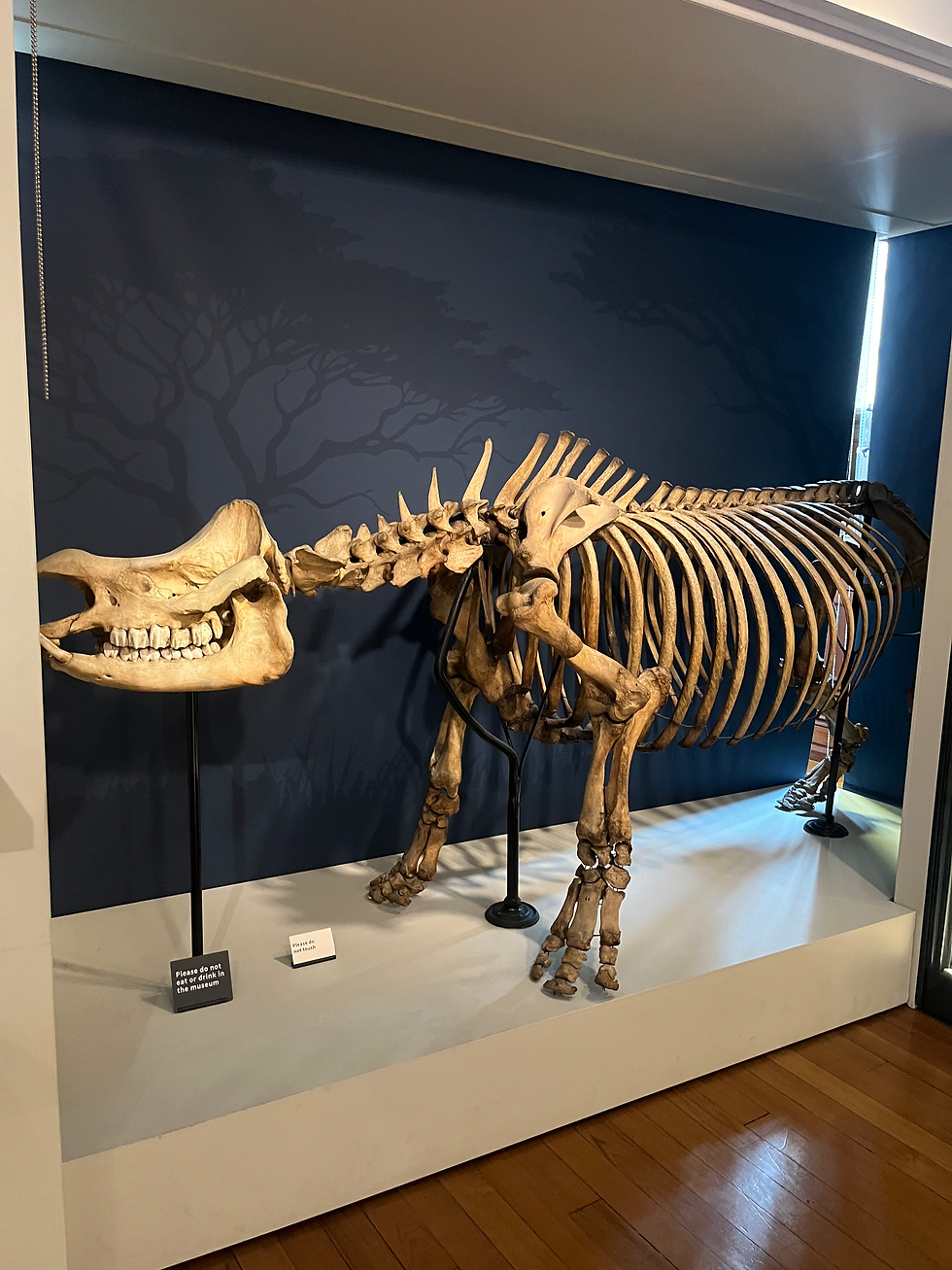
The first thing that drew my attention when I got there was most obviously the biggest skeleton in the museum. As shown above the skeleton of an Indian One-Horned Rhino was proudly displayed. With a background in paleobiology I don't normally see skeletons of things that are still alive (the Indian Rhino was brought back from extinction due to international conservation efforts and is now the most numerous of Asia's three rhino species) so it was cool to see a lot of things like this in the museum.

Next is the skull of a black rhino (top), and arguably more interesting, a dried elephant heart (bottom) that has been varnished and painted for study. The heart was actually huge and would usually weight between 20 and 30kgs! Elephant hearts also only beat 30 times a minute which is very slow compared to humans.
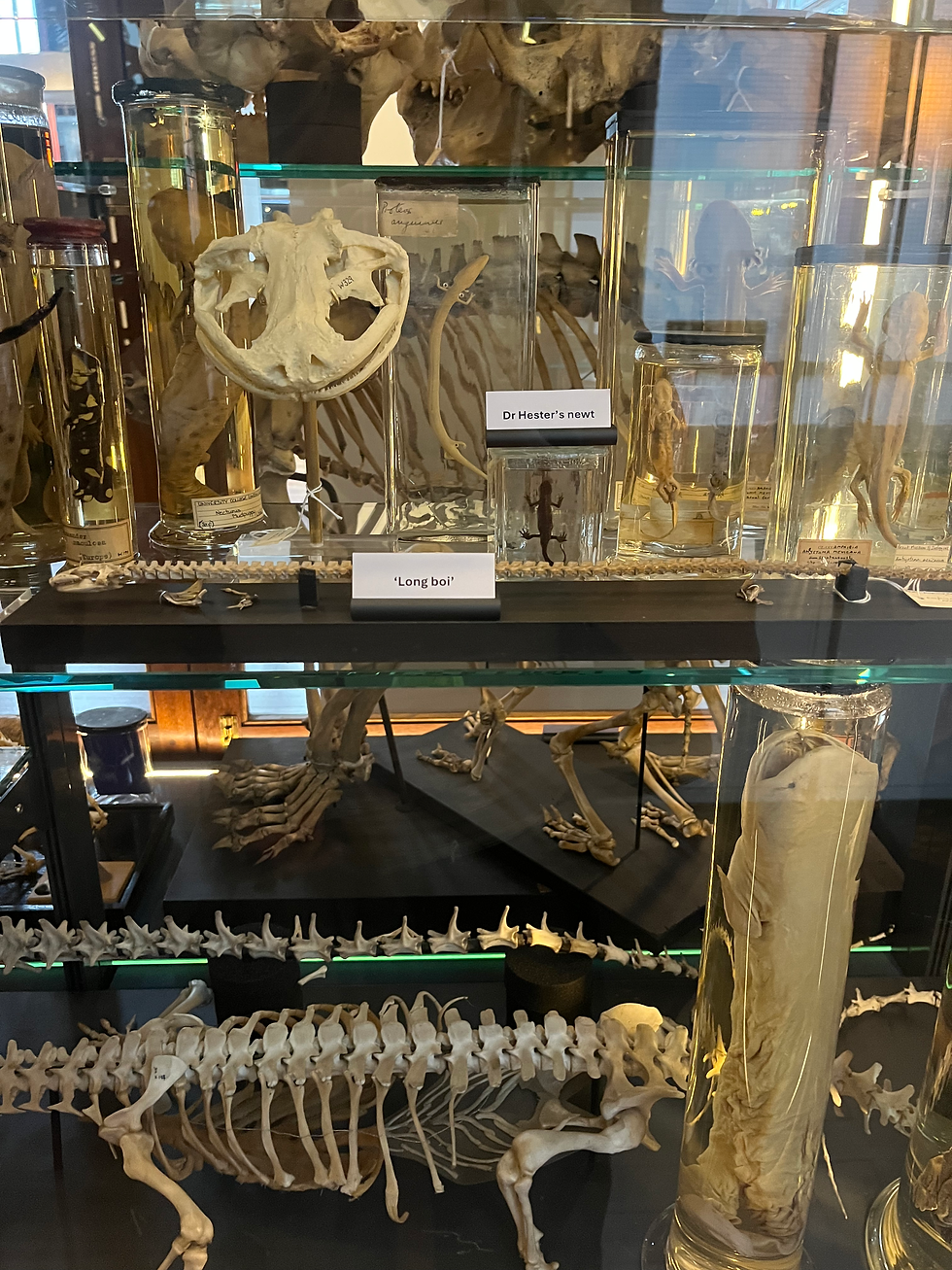
There was loads of skeletons of lots of different animals including this display case of frogs, snakes, newts. The reason I look this picture was because of the central specimen which is labeled very scientifically as 'long boi'. I very much enjoy the energy given off here and I have no idea what type of animal it actually is. Maybe a snake?

I had to take a picture of this case because its back in my familiar paleobiology realm with ammonites (fun fact I actually have one of these tattooed on my ankle) and nautilus.
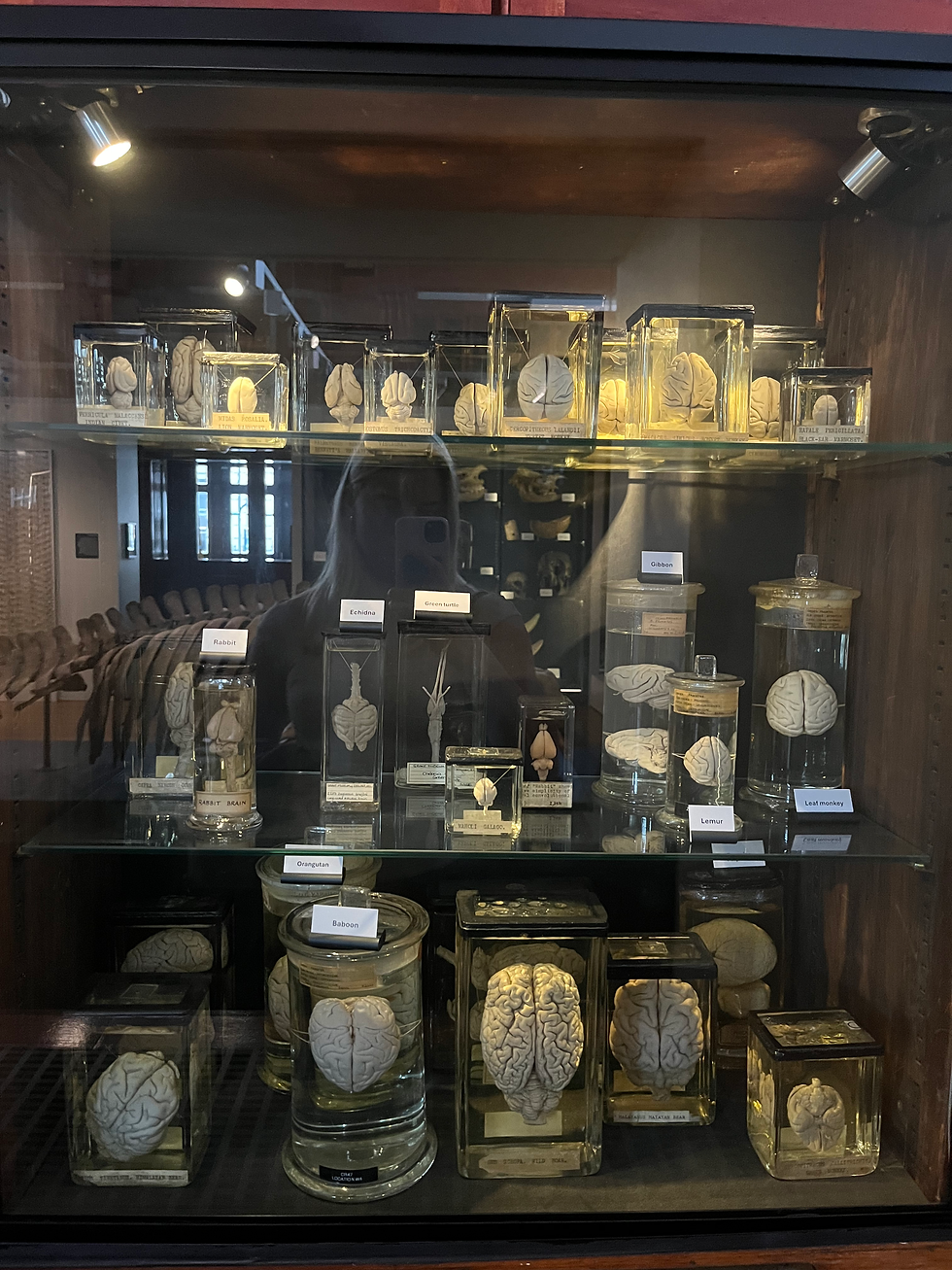
This display case is in fact a bunch of brains. This was very cool actually. There was brains from a whole range of animals including a baboon, an octopus, an echidna, a turtle, and a rabbit brain. They are in fact real brains, all of mammals, that have been preserved in alcohol and suspended using thread in glass jars.
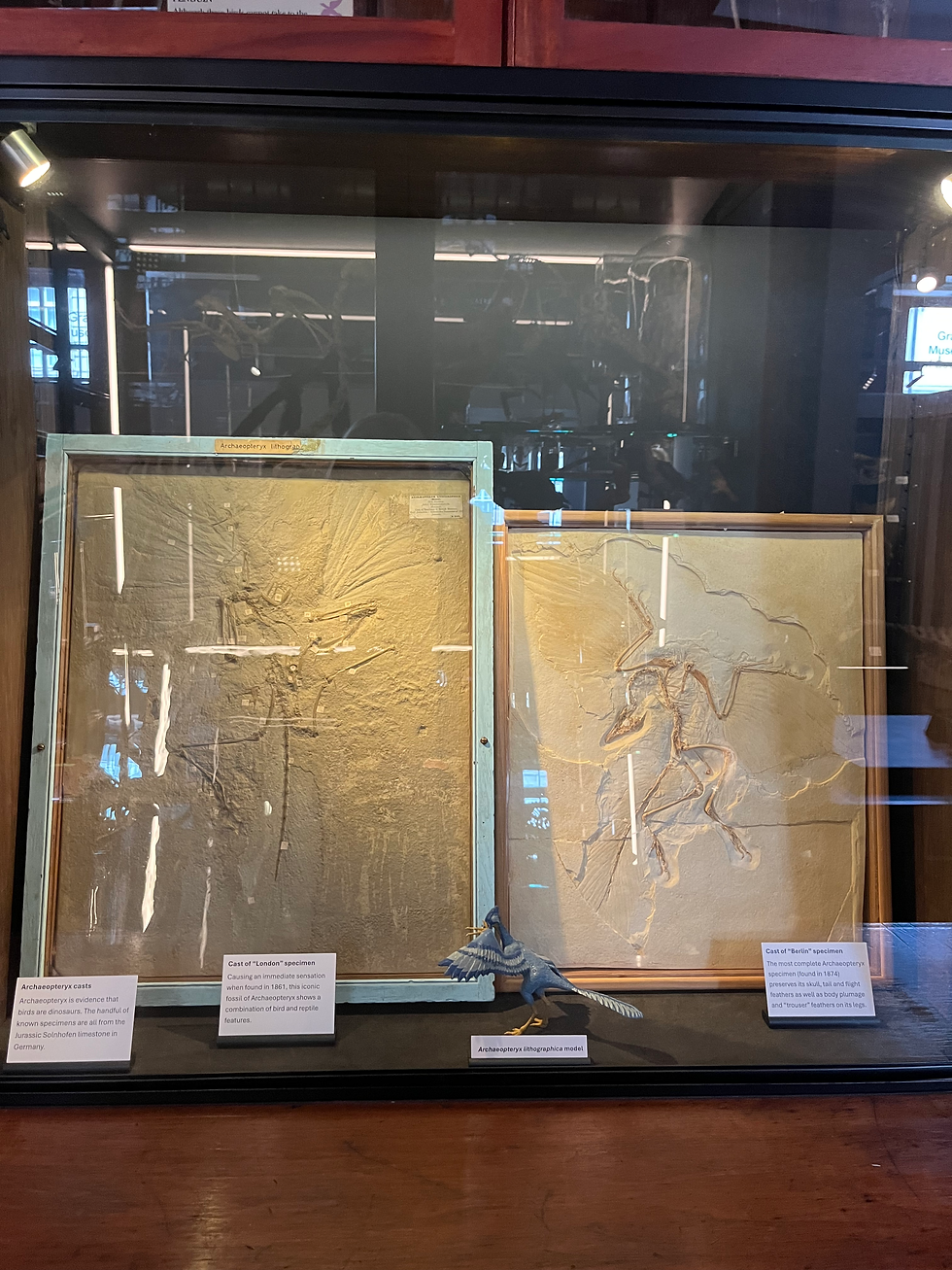
Next we are back in a paleobiology realm with two casts of Archaeopteryx. Archaeopteryx is a very famous fossil and is essentially the evolutionary link between dinosaurs and birds. It has traits of both such as feathers and a wishbone you would find in birds alongside a bony tail and clawed wings you would find in dinosaurs. The left speciemen is a cast of the 'London' specimen which was the first found (in 1861)and right is a cast of the 'Berlin' specimen which was found in 1874 and is the most complete specimen. The actual specimens are housed in London's Natural History Museum and Berlin's Museum für Naturkunde respectively.

Next we have a bunch of skulls (both models and casts) showing the evolutionary ancestors of homo sapiens
Australopithecus afarensis (top left) is one you learn about in GCSE biology and was around 3-4 million years ago. Homo habilis (top right) is a more recent ancestor form just under 2 million years ago. Homo erectus (bottom left) is more recent still from just over 1 million years ago and the Neanderthals (bottom middle) are the most recent of our ancestors. The bottom right is a cast of a Homo sapiens skull.

Finally, what I thought was the absolutely coolest part of the whole museum was the Micrarium. This was a collection of microscope slides (over 2,300) that were used by zoology students. They used to be able to check them out like a library to study them. As a geology student we did a lot of microscope work looking at rocks so it was amazing to see living (or once living) things on the slides instead of minerals. The slides were hand labelled and displayed in a back lit cave so you could see the contents of the slide clearly. I spent ages looking at them all and some of my favourite ones are pictured below.
top left - Chaoborus Larva (glassworm)
top middle - Rabbit foetus
top right - Neuroptera wings (lacewings)
middle left - Ophiuroidea (brittle star)
middle middle - Newts
middle right - Dragonfly wings and 4 day old chick
bottom left -Peachia hastata (sea anemone)
bottom middle - Petromyzon branch (sea lamprey)


Comments